
Georgia Institute of Technology
Nanotechnology Research Center
Expertise: Biology, Life Sciences, Integrated Systems, Electronics
The Georgia Tech-NNIN (GIT-NNIN) site has dedicated expertise and facilities for the application of nanofabrication to bioengineering and biomedicine. Much of the GIT-NNIN activity is carried out in the Institute for Electronics and Nanotechnology (IEN). The IEN supports two cleanroom and lab facilities used by nearly 700 researchers annually, with more than one-third from external institutions.
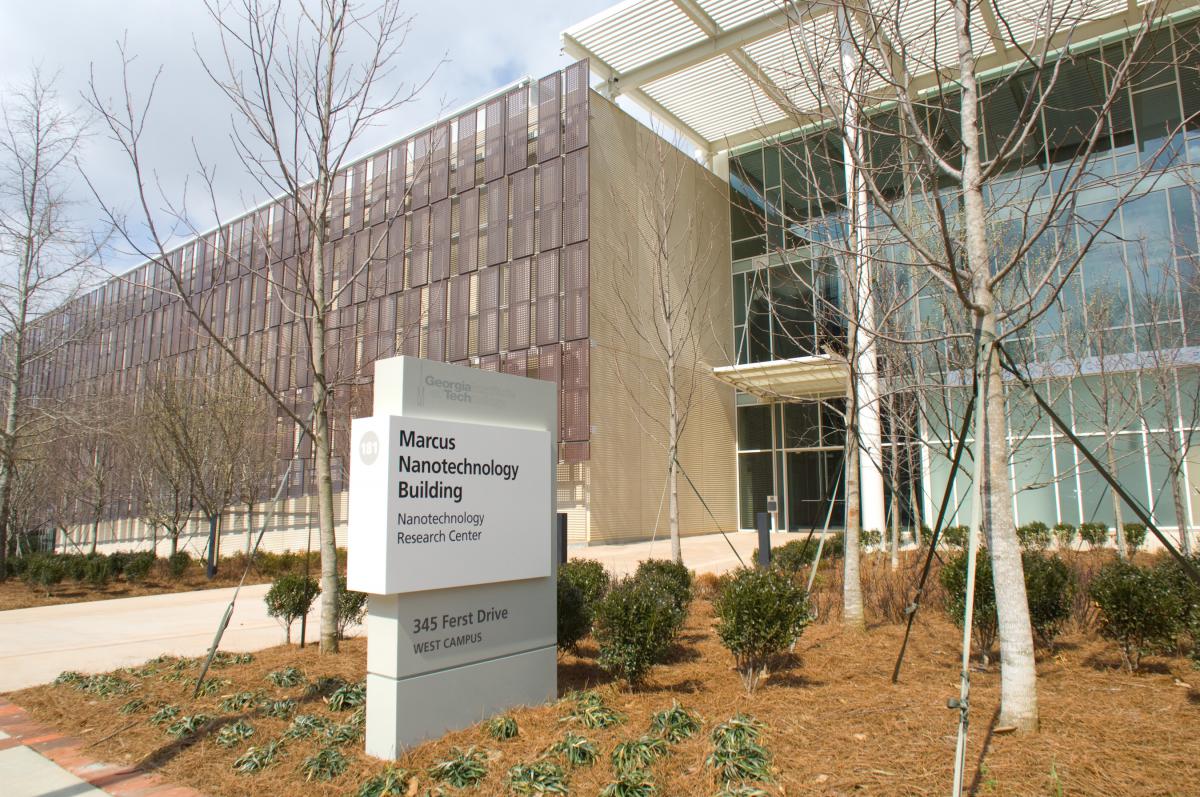
The Pettit Microelectronics Building has 100,000 sq. ft. that includes an 8,500 sq. ft. cleanroom (75% class 100, 25% class 10). The major fabrication facilities in the cleanroom include thin film deposition, plasma processing, optical, electron beam and nanoimprint lithography, thermal processing, atomic layer deposition, electroplating, and device packaging. Characterization tools include optical and electron microscopy, AFM, FIB, stylus and optical profilometry, X-ray tomography, SIMS, low/high force scanning nanoindentation tribology, and high speed electronic and optical testing. Design and simulation tools are available on PC and workstation clusters under campus-wide site licenses. The Marcus Nanotechnology Building complements these resources and includes an additional 15,000 sq. ft. of cleanroom space (class 10-1000), of which 1/3 is devoted to research at the intersection of life sciences and micro/nanotechnology. Instrumentation supported in this facility includes biomolecule, nanoparticle and polymer surface patterning, surface and particle characterization (XPS, QCM-D, SPR, contact angle, DLS), and imaging (variable pressure SEM, confocal microscopy). Design and simulation tools are available on PC and workstation clusters under campus wide site licenses. These facilities are open to the NNIN user community from a wide range of disciplines including electrical, mechanical, chemical, materials and biomedical engineering as well as physics, chemistry, and biology.
The NRC has historically supported research on a wide variety of materials, structures, and processes, much of which is nonstandard. The scope of research includes: nanostructures, nanoelectronics, photonics, MEMS and BioMEMS, materials growth, process chemistry, and chem/bio sensors.
The full-time technical staff supports the installation and maintenance of equipment, development of baseline processes, management of training and safety programs, maintaining stock consumables, and supporting the cleanroom website. Training has been designed to promote the culture of open-access facilities, to foster research, education, and outreach in diverse fields, to break the isolation between fields, to lower the barrier between users and well-equipped research facilities, and to support nanoscience and nanotechnology activities.
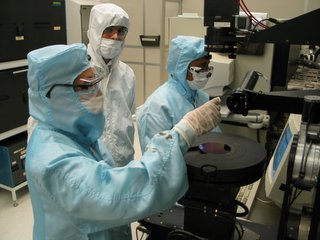
Core to the operation of the cleanroom, the website (https://cleanroom.ien.gatech.edu/) provides equipment scheduling, remote access and virtual training and troubleshooting capability, as well as providing an interactive forum for users and staff. The IEN facilities are open 24/7 with the exception of scheduled maintenance.
For Information and Access Contact:
David Gottfried, Ph.D.
404-894-0479
dsgottfried@gatech.edu
https://cleanroom.ien.gatech.edu/
The NNIN Education and Outreach office is located at Georgia Institute of Technology. For further information please contact:
Nancy Healy
404-385-4307
nancy.healy@mirc.gatech.edu